Showing posts with label flashcards. Show all posts

Monday

Is There a Better Way to Teach "Sight" Words?


Most sight word learning resources and activities do not show how to sound out the words.


My children were taught "sight words" this way in school. Five new unrelated words were taught each week in Kindergarten. My children were taught to memorize words. Flashcards were sent home for practice. I went along with this way of teaching, but I missed an opportunity to help my children read words.
Here's a video of a mom practicing "sight word" flashcards. She sells videos to help teach children to memorize words. There are too many words to memorize!


My oldest son was reading before Kindergarden. He's ten now. My youngest are boy/girl twins. They are eight now. I began questioning sight word learning when my daughter fell behind her twin brother toward the middle of first grade. You can read about my daughter's problems with reading by clicking on the highlighted words. What I discovered was my visual daughter looked in the air when reading to remember a word by shape and guessed at hard words. She ignored letters. Reading was all about guessing and memorizing. When books got harder she was required to read words, but she didn't know how.

The Reading Genie explains the process involved in learning to read words in a way that helped me understand it the best. He's a reading teacher, so you have to skim through the technical language to find the information you want. He shared a study that found children who are taught to sound out a word can recognize the word much quicker than a child who is taught the word by sight alone.


Here's a video by someone who has a strong opinion.


A good friend and fellow blogger has addressed the area of sight word learning on her blog.

Here's a post from Becky at This Reading Mama you may want to check out.



Share/Bookmark

Friday

Common Two Letter Phonogram Video


Beginning readers need to learn letter and vowel sounds to read. The individual sounds of language and the letters that represent these sounds are called phonograms. 


Here's a video I found with the following phonograms. (ee, ea, sh, ch, oo, oo, ou, ar, or, ir, ow, oy, oa, ow, ay, ai)


You can print common two letter phonograms on heavy paper to make your own flashcards.

Visit this link to find free phonogram flashcards to print.

You may want to print your cards on heavy weight paper and use the directions on this page to cut your flashcards.

You will need to cut half an inch off the top and bottom to make the flashcards a uniform size.

When you cut 1/2 inch off the bottom, your paper should be 10 inches long.

Next you cut 2 inch strips.


Cut them in half at 4 1/4 inches.

Stay tuned.
I'll be sharing ways to teach phonograms every Friday for awhile. Please follow or subscribe with email if you don't want to miss a post.


Share/Bookmark

Short Vowel Sound Books to Read After Learning VC and CVC Words


Have you printed the free high frequency word flashcards with phonics rules on the back I shared in a previous post? You may find them helpful. Make some blank flashcards to write more high frequency words you want your beginning reader to practice. 


I've shown ways to introduce some VC words and CVC words. V stands for vowel and C stands consonant. If a child is comfortable reading words with short vowel sounds, it is time to try to add all the VC and CVC words to your pile of flashcards to practice. Add a few at a time and remind your reader to be ready for a short vowel sound.

VC - and, at, in, is, it, on, up
VCV - can, red, yes, did, big, this, will, with, not, but, fun, run

Here are some books I recommend for a child reading short vowel words. These are the most interesting phonics books I've found. If you have other suggestions for short vowel stories, please share in a comment.
Playful Pals
Animal Antics
Clever Critters
Starfall Short Vowel Pals

I'm also recommending any Brand New Readers or any Scholastic Readers Level 1 to include stories with picture clues, some rhyming, and some repeated language ideal for beginning readers. I believe children should have a combination of phonics and easy reader books. Phonics books provide a child an opportunity to practice sounding out words but should not be the only books he or she is given to read.

Usborne Books & More has phonics books and early reader books.


Share/Bookmark

Phonograms and Flashcards


Phonograms are letters that make up sounds. Phonograms can be one letter, or they can be a combination of letters. This post contains words with phonograms you may want to start teaching your beginning reader from the free printable high frequency flashcards I shared in a previous post.
Here are some words from the flashcards grouped by phonogram:
ay - play, way, away
ar - are
or - for
ow - how now, down
ow - yellow
ou - out, house
oo - too
ng - thing

You may want to add other high frequency words . Just add a few at a time to learn. Cut cards the same size as the ones you printed and write the new words with a black marker. I suggest keeping words with the same phonics rules or phonograms right next to each other in the flashcard pile while practicing. This will help your beginning reader make patterns and connections.

Here's a resource I found online you may find helpful when teaching phonograms.
PhonogramPage

You may want to make flashcards with phonograms for your beginning reader.

Are you using these flashcards? Let me know how it's going in a comment.
Share/Bookmark

Teach VC Phonics Rule with Hop on Pop


The words is, in, and on follow the VC phonics rule. Here's a video showing how to teach a child these words.


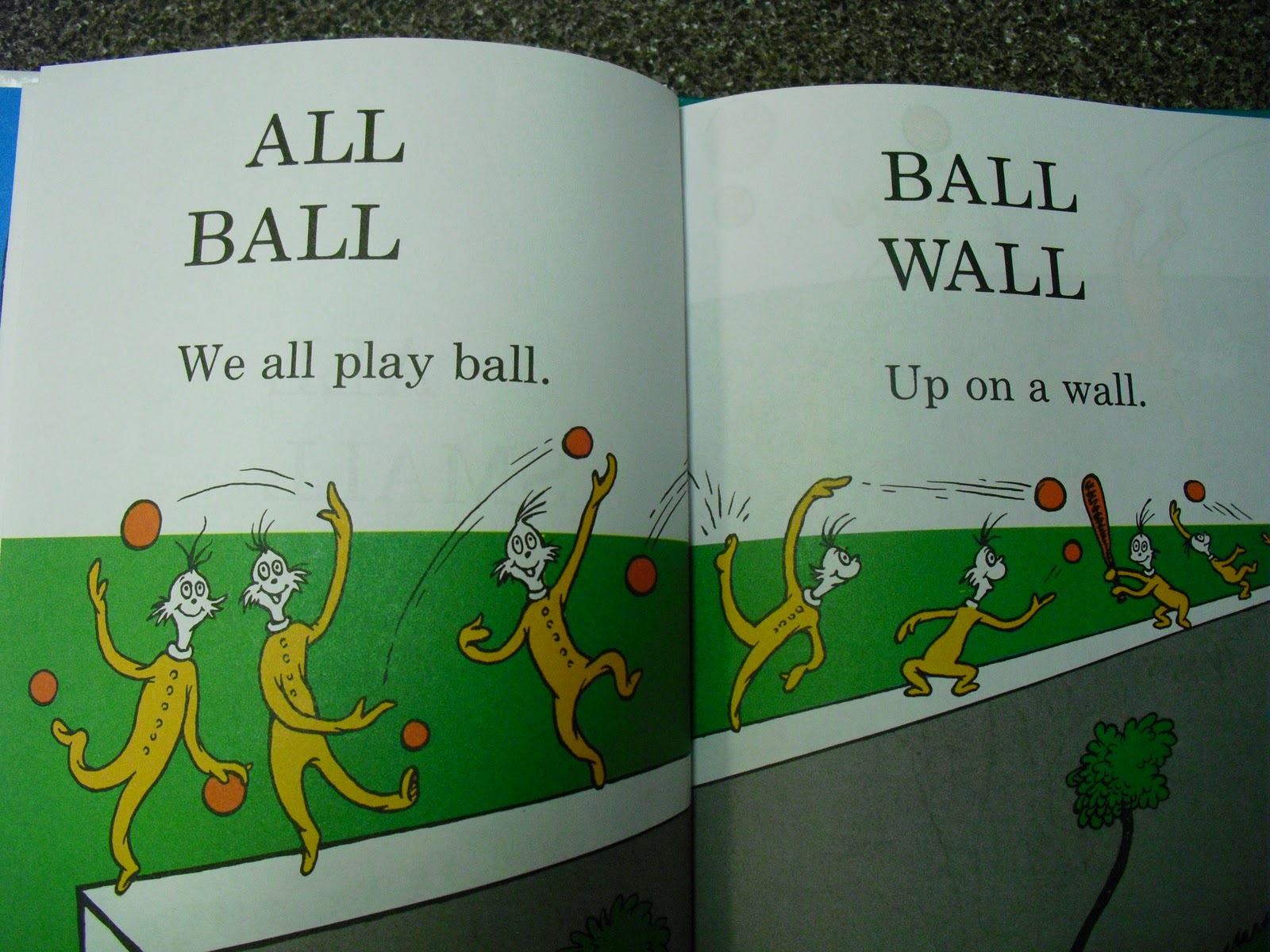
The first pages in Hop on Pop have the words is, in, and on. This is one of my favorite books to let a child practice using newly learned phonics rules. The reading of this book can be shared where an adult reads parts and a child reads parts.


Share/Bookmark

Tuesday

Teach CVC Phonics Rule with Short u Words


Practice making the short u sound with a child. Make sure the child is able to make the correct sound. The C stands for consonant and the V stands for vowel. Explain which is which to a child.
The CVC rule gives a new reader a clue to use a short vowel sound. I explain it this way. The vowel is all alone in the middle. The vowel is shy and makes a short sound instead of shouting his own name.

There are exceptions, but they usually follow a spelling pattern. (find, grind, old, cold, sold, told, wild, child, mild) I've found that vowels alone in the middle of consonants usually make a long sound next to a blend or two consonants together. These seem to be the rule breakers.


Here's a video of me teaching how to blend the sounds and read the words using magnetic letters.


Starfall has Gus the Duck and a word making game you may want to use to practice the short u sound.
Share/Bookmark

Thursday

Teach the CV Phonics Rule with NO, GO, WE, and ME


Recently I shared word flashcards to print and cut with phonics rules on the back. The words no, go, we, and me follow the CV phonics rule. This rule tells a reader to usually make a long sound at the end of a short word if it ends in a vowel. This set of flashcards has a few exceptions to this rule. The words are TO, DO, and WHO. They all have the same sound and can be taught together. You can call these rule breakers.
Check out this post for ideas to teach and practice the words no and go.

Make sure your child is confident in the long o, long e, hard g, n, w, and m letter sounds.

Put the flashcards NO, GO, ME, and WE in a ziplock bag for practice. As you teach new words you can add them to this bag for practice and review. Practice these words at least every other day. (Dads, moms, grandparents, and older siblings can all help a child practice and review flashcards.) After a child knows these four words, I suggest making your own flashcards for the words SO and HE to show more words that follow similar phonics patterns.

The first step is to show a child to make the letter sounds and blend the sounds together to make the sounds into a word. Here's a video of me showing how to blend the sounds in the words NO, GO, and SO using magnetic letters.


Magnetic letters have the added bonus of mixing the letters up and asking a child to put them back together.

You can share read the book Hop on Pop by Dr. Suess to allow a child to practice the words WE, ME, HE, and NO. You will read the book to a child. Pause and point under WE, HE, ME, and NO at the beginning of sentences and when they are written in bold type at the top of the page. Make sure your child knows which words he or she is expected to read. Some children want to take over all the reading in a shared reading and get frustrated.

Here are the pages from Hop on Pop you can share read.


Share/Bookmark

Tuesday

Teach a Child to Read the Words NO and GO

Previously I posted high frequency word flashcards to print and cut. NO and GO are good words to start teaching. Make each letter sound. Then blend the sounds together. The n sound in no can be stretched. Make the n sound together until a child is ready to make the o sound. (nnnnnn-ooo) The g sound in go is a quick stop sound. You'll have to make the o sound quickly to make it sound like a word. You may want to use magnetic letters, show the flash cards, or write the words. Talk about how each word ends in the same sound. Explain that words with a vowel at the end usually make a long vowel sound. If you are using magnetic letters, mix up the four letters and see if your child can put the words back together.

Now that your child is familiar with the words NO and GO you can share read some books and let your child read these words.

Where's Spot is a fun lift the flaps book. An adult can point under the words in the story and read but stop and let the child read the when the word NO is pointed under.


Go, Dog, Go! is a book children want to read again and again. It was a favorite in my house. An adult can share read this book, pause at the word GO, and let the child know to read the word GO when it is pointed under.

Showing a child to point under words when reading is something that can be done while reading books with simple text to a child. I don't think pointing should be done every time but modeling it every now and then may be helpful. Beginning readers are encouraged to point under words while reading.
Share/Bookmark

Teaching Sight Words in an Organized Way with Phonics


Previously I posted free sight word flashcards with directions to print and cut. Here are these sight words organized by phonics rules.
CVC (a vowel in a syllable or word trapped between consonants is usually short) – big, but, can, did, fun, funny, little, not, red, run, that, this, will, with, yellow, yes


VC (a vowel at the beginning of a syllable or word is usually short) – and, at, in, is, it, on, up

CV (a vowel at the end of a word or syllable is long) – go, I, me, my, no, see, she, so, we

Schwa Sound (any vowel can make the “uh” sound in some words) – a, away, come, pretty, some, the, what

Third Sound of a (an a followed by u, w, lk, ll, or lt usually has a short o sound, an a after a w usually has a short o sound) – walk, want

A Vowel Sound Off – do, to, who, you

Silent e Rule – here, like, make, ride, take

Long a – make, play, take, way

Long e – here, me, see, she, we

Long i – find (grind, mind), like, my, ride

Long o – no, oh, so, yellow

Long u – blue, do, to, too, who, you

R Controlled – are, for, work

OW and OU words – down, how, house, now, out, yellow

OO words – look (took, shook, book) too (boo, moo, moon)

Others – give, have (English words don’t end in a v, so a ve word can be long or short) one (once, none), there (where), thing (ng has a nasal sound)

You can make the flashcards I shared and add your own words. Just cut blank 2" by 4 1/4" cards and write new words on them with marker. The best way to teach new words is to introduce them with known words that follow a similar phonics rule.

I'll be posting more ways to introduce and teach these words soon.
Share/Bookmark